


Warlord/Histórica

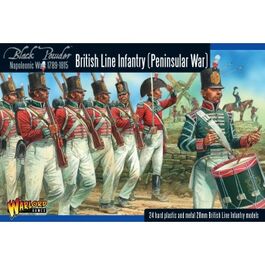
- Black Powder British Line Infantry (Peninsular) (24) - EN
Widely held as the finest body of fighting men to have fought under the Union flag, the British army in the Peninsular campaign tasted defeat but were far more often to be found savouring yet another victory over their old foe, the French.
Led by great commanders such as Moore, Crauford and Wellesley, the British army was a well-drilled and, on the whole, disciplined force that saw service on the Iberian Peninsula from 1808 until the end of the campaign in 1814.
The redcoated British foot regiments were ably supported by their Portugese, Spanish and German allies in addition to their countrymen in the cavalry and artillery. This multi-national force subjected defeat after defeat on Bonaparte's French, bringing such battle honours as Vitoria, Salamanca, Talavera, and the brutal siege of Badajoz into British military legend.
Contains:
20 plastic easy-build British Line Infantry.
4 metal command miniatures: officer, drummer and two ensigns with wire flagpoles and finials.
2-page background guide including ten full-colour flags.
Note: Models supplied unassembled and unpainted - 21,95 €21.00% IVA incluido
- Añadir a cesta
- Black Powder Prussian Landwehr Regiment 1813-1815 - EN
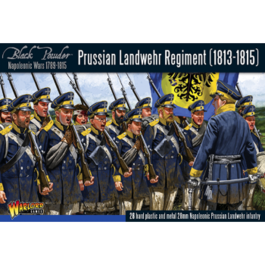
The Landwehr were militia formed from teenagers through to men in their forties. They were plucked from their fields, shops and offices and enrolled into the Prussian military machine to enlarge the forces that could finally depose Napoleon, the Tyrant of Europe. Prussia was a small State but her armies were well-trained and burning to avenge their past defeats.
Full with content, this box set contains:
24 Plastic Prussian Landwehr Militia
2 Metal command (officer and drummer)
A 4-page background guide
11 full-colour flags
The Landwehr consisted of over sixty battalions and were equipped and trained as time and money allowed. A cheap but warm coat, comfortable cap and a musket were considered uniform enough to get thousands of troops out into the field for the restricted Prussian army of the time.
The Landwehr fought bravely in the later wars of the period, fighting hard in the 1813 campaigns and ultimately at the climax of the Hundred Days campaign that was Ligny and Waterloo.
Ill-equipped and half-trained they may have been, but after a few months hard fighting they went on to fight with determination alongside their brothers in the Prussian Line regiments.
Packed with superb detail, these plastics really capture the true nature of the Landwehr infantry, from the rugged farmers down to the youngster facing combat for the first time.
Models supplied unassembled and unpainted - 21,95 €21.00% IVA incluido
- Añadir a cesta
- BOLT ACTION - AFRIKA KORPS INFANTRY - EN
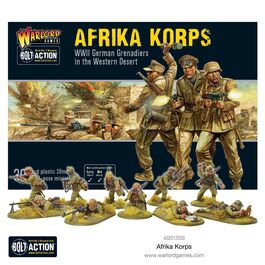
Sent to bolster their beleaguered Italian allies facing the combined forces of the British Commonwealth in North Africa, the Deutsches Afrika Korps proved a dangerous opponent. Commanded by the legendary Erwin Rommel, the Afrika Korps fought a series of ferocious battles in Egypt and Libya as each side pushed the other to breaking point.
Fighting in what was referred to as the last 'Gentleman's War', the German soldier was well respected by those he faced, be they British, Australian, Indian or other nationalities. German tactics in the desert had a profound and deadly effect on how the British armour and infantry formations interacted with one another and these lessons were learnt for the later conflicts in North West Europe.
The Afrika Korps foot troops were more than ably supported by the dreaded '88' (8.8cm Flak) gun as a direct fire weapon and the ubiquitous Panzer IV was developed into what the British troops referred to as the 'Pz IV special' - a tank the British tank commanders learnt to fear and respect in equal measure. Battles at El Alamein, Tobruk and Gazala honed their fighting capability, pushing the British High Command into changes that would bring eventual victory in the desert campaign.
Supplied with a variety of headgear and weapon options Warlord Games' highly detailed and dynamically posed Afrika Korps are ideal for fighting in North Africa as well as into the Tunisian and the Italian campaigns.
Afrika Korps set contains:
Enough plastic components to make 30 Deutsches Afrika Korps miniatures. Includes a host of options to allow for different weapon configurations and command models.
Equipment included: Kar 98K rifle, MP40 submachine gun, MG34 LMG, Pz 39 anti-tank rifle, 5cm light mortar and Luger pistol
Plastic bases.
Full-colour waterslide decal sheet.
Construction leaflet.
Models supplied unassembled and unpainted - 47,95 €21.00% IVA incluido
- Añadir a cesta
- BOLT ACTION - AFRIKA KORPS KRADSCHUTZEN MOTORCYCLE AND SIDECAR - EN
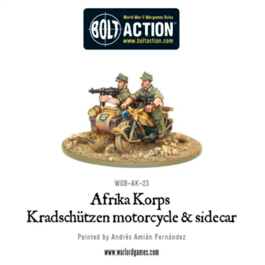
Key to the campaign waged in the Western Desert was mobility in order to cross the vast sandy deserts. As a result both sides relied heavily on tanks and transports. Amongst these were the BMW 75 and Zundapp motorcycles utilised by the Deutsche Afrika Korps and adding extra speed and manoeuvrability to your Afrika Korps force.
The riders are separate from the motorcycle so you can easily mix and match as you prefer. For instance, you could add the pillion rider to the back of the Motorcycle and sidecar combination. These models also utilise our Figure Head system so you have choose which heads to build them with as well as having freedom of positioning.
Pack contains 1 metal motorbike and sidecar with 2 metal riders.
Note: Models supplied unassembled and unpainted - 18,95 €21.00% IVA incluido
- Añadir a cesta
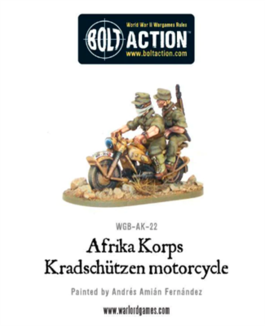
- BOLT ACTION - AFRIKA KORPS KRADSCHÜTZEN MOTORCYCLE - EN
Key to the campaign waged in the Western Desert was mobility in order to cross the vast sandy deserts. As a result both sides relied heavily on tanks and transports. Amongst these were the BMW 75 and Zundapp motorcycles utilised by the Deutsche Afrika Korps and adding extra speed and manoeuvrability to your Afrika Korps force.
The riders are separate from the motorcycle so you can easily mix and match as you prefer. For instance, you could add the pillion rider to the back of the Motorcycle and sidecar combination. These models also utilise our Figure Head system so you have choose which heads to build them with as well as having freedom of positioning.
Pack contains 1 metal motorbike with 1 metal rider and 1 metal pillion.
Note: Models supplied unassembled and unpainted - 13,50 €21.00% IVA incluido
- Añadir a cesta
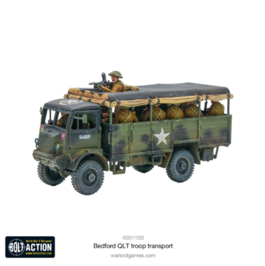
- BOLT ACTION - BEDFORD QLT TROOP TRANSPORT - EN
This box contains one plastic Bedford QLT troop transport, and a sprue of seated British infantry passengers to fit in the rear. Packed with fantastic, crisp detail, and able to be assembled with the canvas-covered cargo bay in multiple configurations, it’s a must-have addition for anyone fielding a British force in Bolt Action and wanting some extra mobility on the tabletop!
The troop transport version of the legendary Bedford QL series of lorries, the QLT was the iconic British truck of the Second World War, and these rugged, dependable vehicles would serve ably throughout the conflict. Unarmoured, with a simple canvas tilt to provide some protection from the elements, and capable of mounting a Bren gun for self-defence, these trusty workhorses would cover countless miles delivering troops and supplies wherever they were needed. No British Bolt Action collection is complete without at least one Bedford!
Serving virtually everywhere British forces went around the world, the painting and modelling options included in this kit are almost endless, making it a perfect opportunity to really go to town and create a standout visual centrepiece for your collection!
Models supplied unassembled and unpainted
- 35,95 €21.00% IVA incluido
- Añadir a cesta
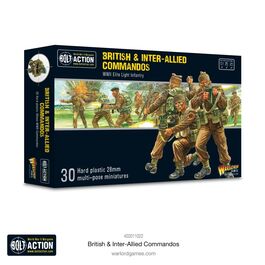
- BOLT ACTION - BRITISH & INTER-ALLIED COMMANDOS - EN
The Commandos established an extraordinary reputation for dash and bravery in World War II. Formed in 1940 by order of British Prime Minister Winston Churchill with the express goal of taking the fight back to the apparently unstoppable German armed forces that had thrown the British Expeditionary Force out of France with such apparent ease. An all-volunteer force, they recruited from all parts of the armed services. Indeed there were Army commandos, Naval commandos and the Inter-Allied Commando regiment which included nationalities such as the Belgians, Polish, Dutch and others.
Commandos fought in campaigns in Europe, Burma, Africa and earned battle honours for many famous actions including arguably the greatest raid of all – St Nazaire.
Commandos were fielded in many different ways - from units of less than a full section up to full assault divisions depending on the task at hand. Superbly trained, aggressive in action, well-equipped and deadly in hand-to-hand combat the Commandos were rightly feared by their German, Italian and Japanese foes.
Contains thirty plastic figures, bases and decals
Note: Models supplied unassembled and unpainted - 47,95 €21.00% IVA incluido
- Añadir a cesta
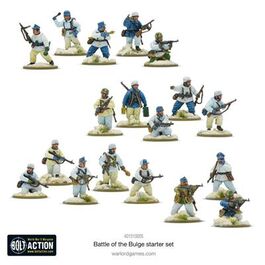
- BOLT ACTION - FALLSCHIRMJÄGER WINTER INFANTRY - EN
- 45,95 €21.00% IVA incluido
- Añadir a cesta
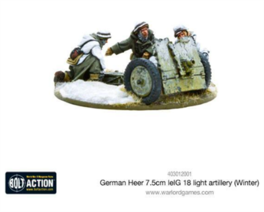
- BOLT ACTION - GERMAN HEER 7.5CM LEIG 18 LIGHT ARTILLERY (WINTER) - EN
The Germans employed a tremendous variety of light infantry guns, field guns and howitzers, which generally had a caliber of 75mm. These guns were used for close support and were light enough to be manhandled by their crews.
Models supplied unassembled and unpainted
- 23,95 €21.00% IVA incluido
- Añadir a cesta
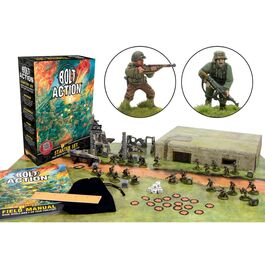
- BOLT ACTION - STARTER SET - EN
Wage World War II on your tabletop!
The Bolt Action Introductory Set guides you through your very first steps into the world of tabletop wargaming, and welcomes you to the world of Bolt Action, the ultimate World War Two wargame! Designed specifically to introduce the fundamentals of the hobby in fun, simple steps, you’ll learn how to assemble and paint your first models, play your first games, and introduces you to the wider world of Bolt Action.
Inside the box, you’ll discover finely detailed, plastic miniatures – tough German Grenadiers and fearless US Rangers – and a double-sided battle mat with plastic scenery to set the stage for your games. The included Bolt Action Field Manual takes you through every stage of the hobby with simple, easy-to-follow instructions. Learn how to build your new models, then take them straight into the action! Through a series of fun, introductory missions, you’ll familiarise yourself with the key mechanics of Bolt Action. In no time at all, you’ll be leading your forces into battle!
The Bolt Action Introductory Set contains:
Full colour, 68 page book - The Bolt Action Field Manual
12 Plastic German Grenadiers (28mm)
12 Plastic US Rangers (28mm)
Plastic Ruined Farmhouse Scenery
Game Token Punchboard
Double-sided Gaming Mat (30” x 22.4” approx.)
Six Bolt Action Order Dice (3 Grey / 3 Olive Drab)
Eight six-sided dice
Dice Bag
Cardboard Insert that doubles as an in-game Bunker
Models supplied unassembled and unpainted - 78,95 €21.00% IVA incluido
- Añadir a cesta
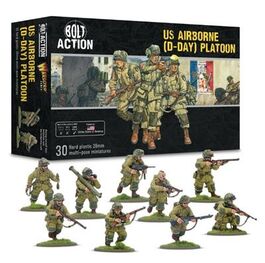
- BOLT ACTION - US AIRBORNE (D-DAY) PLATOON - EN
Bring death from above with the US Airborne (D-Day) Platoon!
Clad in their iconic reinforced M42 jump uniforms, these die-hard American paratroopers are ready to spearhead the assault on the Bolt Action tabletop. Combining plenty of lightweight firepower with a never-say-die attitude and intense training, these tough, veteran troops can be assembled in a huge number of ways and can represent many different units on the tabletop.
This kit is absolutely packed with options, allowing you to build 30 US Airborne troops in their D-Day uniforms, in a wide variety of dynamic poses. There’s also an enormous variety of weaponry to outfit your men, from the iconic M1 Garand and Carbine, Thompson and M3 SMGs, and BAR, to the powerful punch of the M1919 Browning light machine gun and Bazooka anti-tank rocket launcher. Alongside this is a wealth of additional components, including specialist equipment such as the M-227 Signal Lamp, M1903A4 sniper rifle, and magazine pouches and pistols galore, as well as a wide variety of heads, both in scrim-netted helmets, and with the infamous ‘Mohawk’ haircut of the legendary Filthy Thirteen. All of this combines to allow you to build the units listed below - and these are just some of the possible combinations!
Using this kit and Armies of the United States: Third Edition, you can build up to 30 infantrymen that can represent any of the following:
Airborne Officer
Airborne Medic
Airborne Forward Observer
Paratrooper Squad
Pathfinders Squad
Airborne Engineer Squad
Airborne Bazooka Anti-Tank Team
Airborne Sniper Team
…and more!Sculpted by Wojciech Flis. Studio miniatures painted by Jamie Getliffe.
Models supplied unassembled and unpainted
- 52,95 €21.00% IVA incluido
- Añadir a cesta
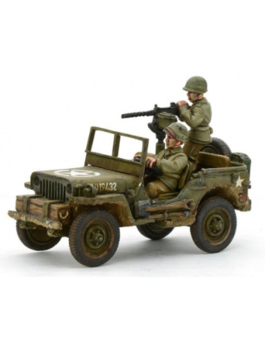
- BOLT ACTION - US ARMY JEEP WITH 30 CAL MMG - EN
In June 1940 the American army asked for a vehicle that could 'go-anywhere'. The answer was the four-wheel drive Willys MB and the Ford GPW, both models referred to as 'Jeeps'. 630,000 jeeps were produced by the end of the war.
Models supplied unassembled and unpainted. - 25,95 €21.00% IVA incluido
- Añadir a cesta
- BOLT ACTION - US ARMY WINTER INFANTRY - EN
- 45,95 €21.00% IVA incluido
- Añadir a cesta
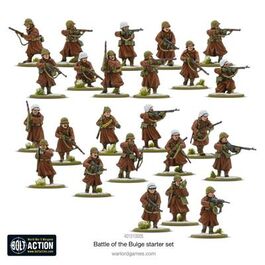
- THE AGE OF CHIVALRY: FOOT KNIGHTS (1150-1320) - EN
AD MORTEM INIMICUS!
'Death to the Enemy!' Sons of noble birth, the knights of 12th and 13th century Europe were the kings of the battlefield. Heavily armed and armored, few could stand in their way. Vassal to a lord, each was paid for their service through land and other riches handed down to them by their liege via the feudal system. Each knight practiced constantly to become a master of arms and horses while holding elite ranks in medieval society. Eventually, the adoption of colored banners, shields, and surcoats led to the rise of heraldry. The ideals of chivalry (though rarely met) were the morality of the day as embodied by this warrior elite.This hard plastic box set allows you to build up to 24-foot knights with a wide variety of weapons, including an axe, falchion, spear, mace, and, of course, the ubiquitous and iconic arming sword. Various heads and shields allow for even more customization, and parts can be combined with the other sets in the range.
This is the first in a new range - The Age of Chivalry - that will soon include Sergeants, Levy, and cavalry sets.
Models require assembly and painting. Bases are not included. Not for Children. Contents may vary from photos.
- 42,95 €21.00% IVA incluido
- Añadir a cesta
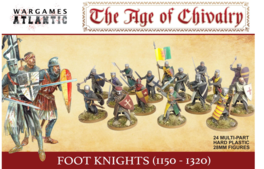
- THE GREAT WAR: BRITISH INFANTRY (1916-1918) - EN
JOIN YOUR COUNTRY'S ARMY!
This hard plastic set allows you to build up to 30 British infantry equipped for World War One and somewhat suitable for the lead up to World War Two.
A selection of hat and helmet types allow you to model for both in the trenches, the sands of Arabia, for early war and officers, and with gasmasks. Lee Enfield rifles, Webley pistols, Lewis guns, grenades, and trench clubs give you a wide range of weaponry to choose from. God Save the King and Protect the Empire!
There are six sprues in each box.
Models require assembly and painting. Bases are not included. Items may not exactly match the photos.
- 41,95 €21.00% IVA incluido
- Añadir a cesta
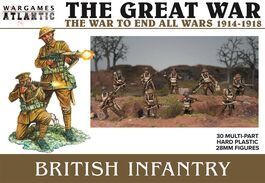
- Warlord - Epic Battles: ACW Confederate Brigade - EN
The most basic infantry building block was the infantry regiment (referred to as a “battalion” in Hardee’s drill manual, which was used by both sides). In both North and South the infantry regiments were organised on similar lines.
A regiment typically comprised ten companies, each numbering 100 men, supported by staff, drummers and officers. However, the rigours of warfare would summarily lead to a reduction in strength by way of battle, disease and desertion, and a regiment's numbers could vary wildly.
Unlike the North, the general policy of the Confederacy was to send raw recruits to reinforce existing regiments in an effort to keep them at fighting strength. This also bestowed the recruits with the benefit of learning from more experienced fighters.
This box contains enough miniatures to make:
Three Regiments (of 100 men each)
Three Cannons
Three Mounted Commanders
Models supplied unassembled and unpainted - 18,95 €21.00% IVA incluido
- Añadir a cesta
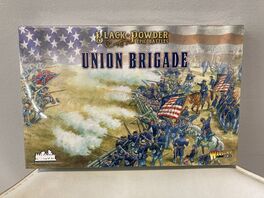
- Warlord - Epic Battles: ACW Union Brigade - EN
The most basic infantry building block was the infantry regiment (referred to as a “battalion” in Hardee’s drill manual, which was used by both sides). In both North and South the infantry regiments were organised on similar lines.
A regiment typically comprised ten companies, each numbering 100 men, supported by staff, drummers and officers. However, the rigours of warfare would summarily lead to a reduction in strength by way of battle, disease and desertion, and a regiment's numbers could vary wildly.
The states of the north had a tendency to allow regiments to fall below an effective level, to a point where a number of such regiments would be forged into a brand-new formation. This sometimes had a detrimental effect as units lost their identities and their associated fighting spirit.
The most common identifier for a regiment was a number and the State in which they were raised – for example, the “15th Alabama” or the “4th Connecticut”.
This box contains enough miniatures to make:
Three Regiments (of 100 men each)
Three Cannons
Three Mounted Commanders
Models supplied unassembled and unpainted - 18,95 €21.00% IVA incluido
- Añadir a cesta
| mostrar 1 al 17 de 17 |